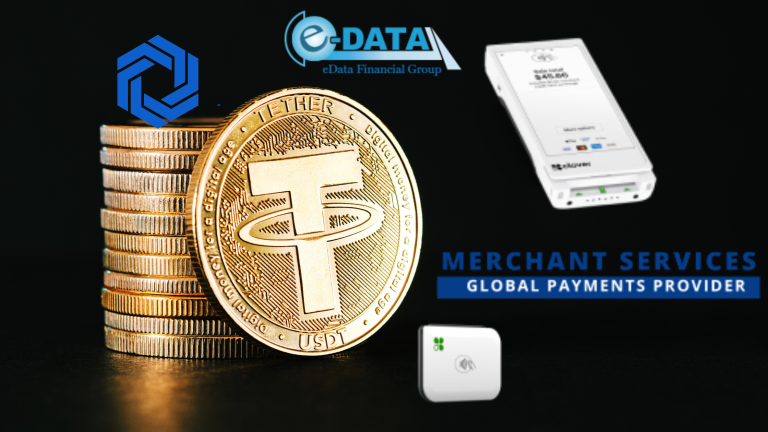
The Tether USDT Payments
Tether (USDT) is the most widely adopted stablecoin in the cryptocurrency market, designed to maintain a 1-to-1 value peg with the U.S. dollar. It functions as a digital representation of the U.S. dollar on various blockchains, providing a low-volatility solution for trading and transactions within the volatile crypto ecosystem.
As a payment service provider eDataPay team look at the USDT for the future payout and Fast payments for our merchants.
Key Characteristics
- Stable Value: Each USDT token is designed to be redeemable for one U.S. dollar, offering price stability that is generally absent in other cryptocurrencies like Bitcoin or Ethereum.
- Backed by Reserves: The issuer, Tether Limited, claims that all outstanding tokens are 100% backed by its reserves, which include assets like cash, cash equivalents (such as U.S. Treasury bills), and secured loans. The company publishes regular transparency reports on its Tether Transparency page.
- High Trading Volume: Tether is the largest stablecoin by market capitalization and frequently records the highest daily trading volume of any cryptocurrency globally, surpassing even Bitcoin at times.
- Multi-chain Support: USDT operates on multiple blockchain networks, including Ethereum, Tron, Solana, Avalanche, and Algorand, allowing users to transfer value across different ecosystems efficiently.
Primary Use Cases
- Trading and Liquidity: Traders use USDT to quickly move in and out of positions on cryptocurrency exchanges without converting back to traditional fiat currency, which can be slower and involve more fees.
- International Remittances: USDT enables fast, cross-border transactions at lower costs compared to traditional banking systems.
- Accessing DeFi: The stable value of USDT allows users to participate in decentralized finance (DeFi) platforms, lending, and borrowing, while avoiding the risks associated with market volatility.
Important Considerations
- Transparency and Regulation: While Tether provides attestations of its reserves, the lack of full audits by a major, regulated accounting firm has been a subject of ongoing discussion and some controversy within the crypto community.
- Risk: Although designed to be stable, temporary deviations from the 1:1 peg can occur during extreme market stress. It is a crypto asset issued by a private company and not regulated by the U.S. Federal Reserve, so it carries different risks compared to the actual U.S. dollar